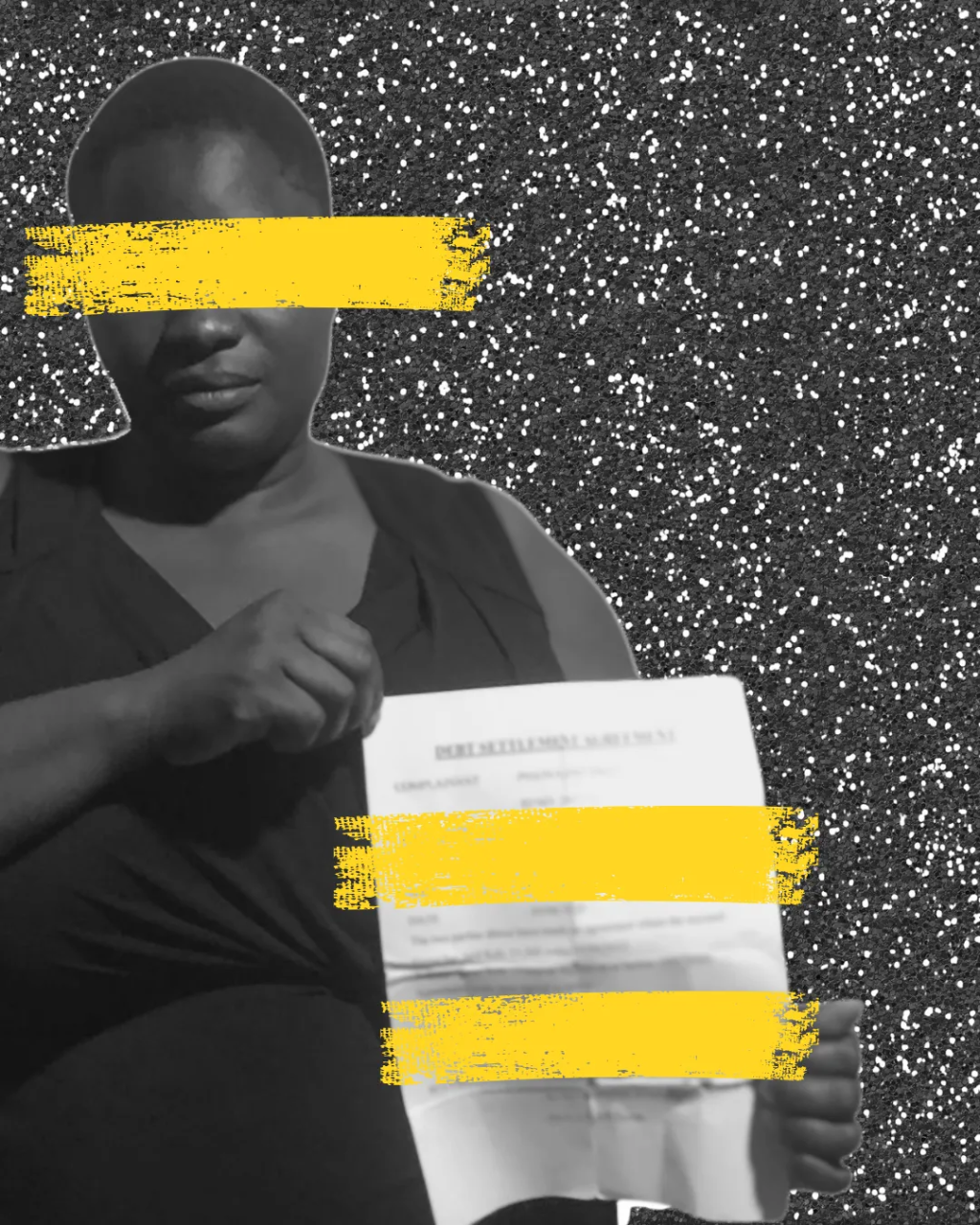
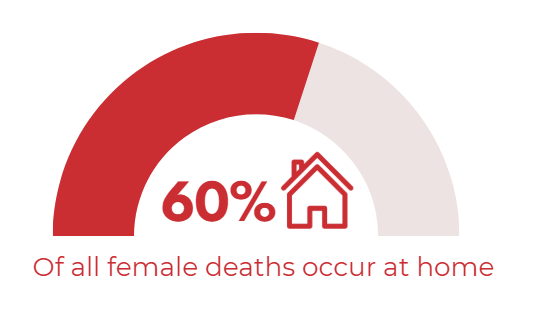
Every 10 minutes, a woman is killed by an intimate partner or family member, according to the United Nations Office on Drugs and Crime (UNODC). The home is the most dangerous place for women. 60% of all female deaths occur at home, this makes the home the most dangerous place globally.
Mary Ngei (not her real name), a GBV and rape survivor from Kibera, Nairobi, Kenya, narrates her experience. “When I woke up, I didn’t know where I was. I had different clothes, it looked like a hospital but then again it wasn’t. A woman came up to me and said, don’t be scared, you are in safe hands. This is the Shining Hope for Communities,(SHOFCO) a safe house in Kibera. The only question I asked, was where are my children”.
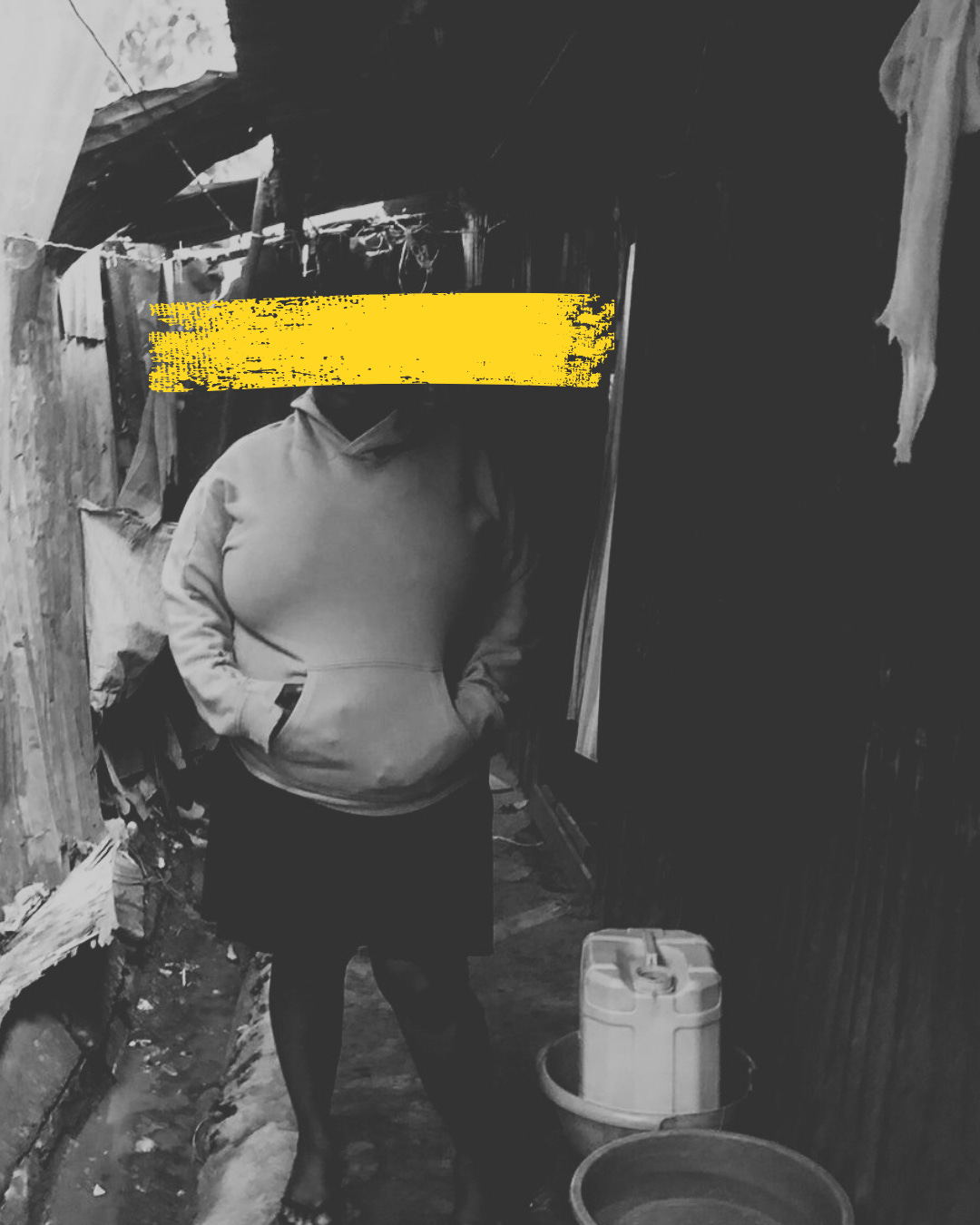
Mary, a mother of two, recalled the night where she escaped death by a whisker. Oliver Otieno, her husband, beat her violently before fleeing Kibera, not to be seen again. A neighbour who often hears the harsh beating Oliver gave his wife, decided to make a call to SHOFCO on this night. Mary had gone to visit her friend and returned home late in the evening, this angered Oliver. He began to beat up Mary in front of their children, leaving her unconscious with a lost tooth. Oliver had hit her with a wooden bat. He took a first hit on her head before swinging a second, knocking off her tooth, and a third before she hit the floor and lost all consciousness.Subscribe
Femicide (or feminicide, as it is referred to in some contexts) is defined as intentional killing with a gender-related motivation. It is different from homicide, where the motivation may not be gender-related. According to a UN women report, In 2023, around 51,100 women and girls worldwide were killed by their intimate partners or other male family members (including fathers, mothers, uncles and brothers). This means that, on average, 140 women or girls are killed every day by someone in their own family.
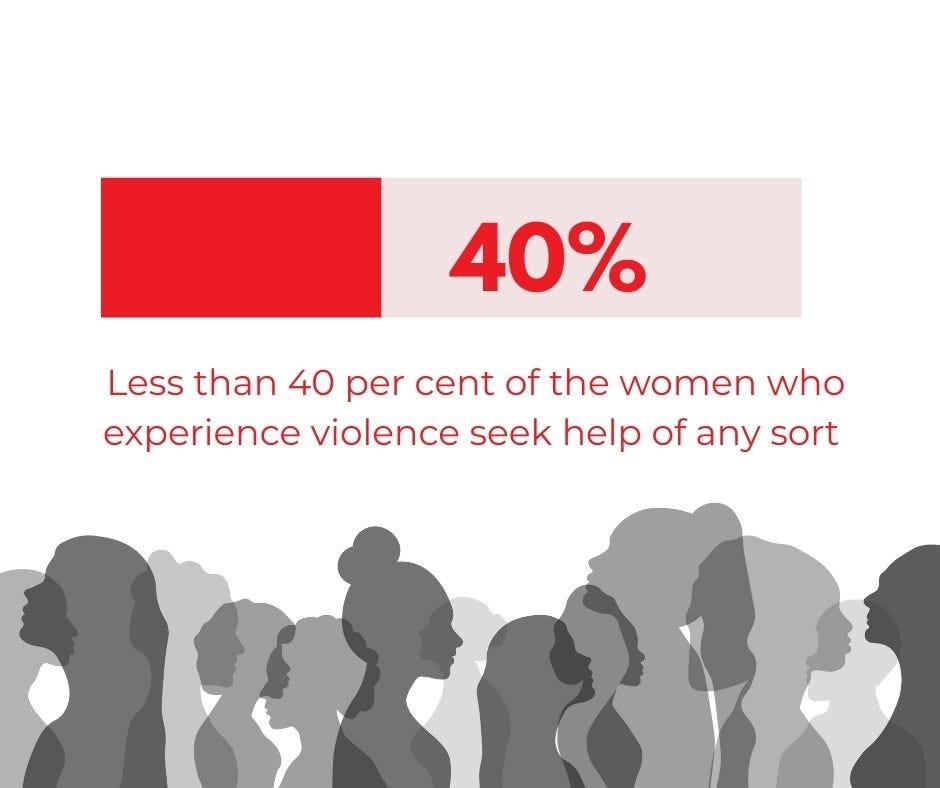
Less than 40 per cent of the women who experience violence seek help of any sort and over 60 per cent of countries still lack rape laws based on the principle of consent. On 10th December, 2024, as the world commemorated Human Rights Day, Kenyans women and young girls marched towards the Nairobi Central Business District to protest against femicide. The campaign was coordinated by human rights activist Zaha Indimuli and supported by civil organizations including Amnesty International. Their key message, #TotalShutdownKEmovement and #EndFemicideKEFemicide.
“All this while I was being abused, I did not know I had rights. There was a law to protect me,” says Mary. She had only lived with her husband for a year when he began his verbal abuse, progressively transitioning towards physical abuse. “This was not his first time hitting me, I was very scared of him and what he might do to my children. I did not know I could report him to the police,
The government responded to the #TotalShutdownKEmovement and the #EndFemicideKE campaign on January 10th by rolling out a special gazette notice with a 42-member Task Force, under the leadership of President William Ruto. The formation of the Technical Working Group on Gender Based Violence (GBV), which includes femicide, is to play a critical role in identifying trends, hotspots, and causes contributing to GBV and femicide. It will also analyse the adequacy of current legal and policy frameworks in addressing GBV and femicide.
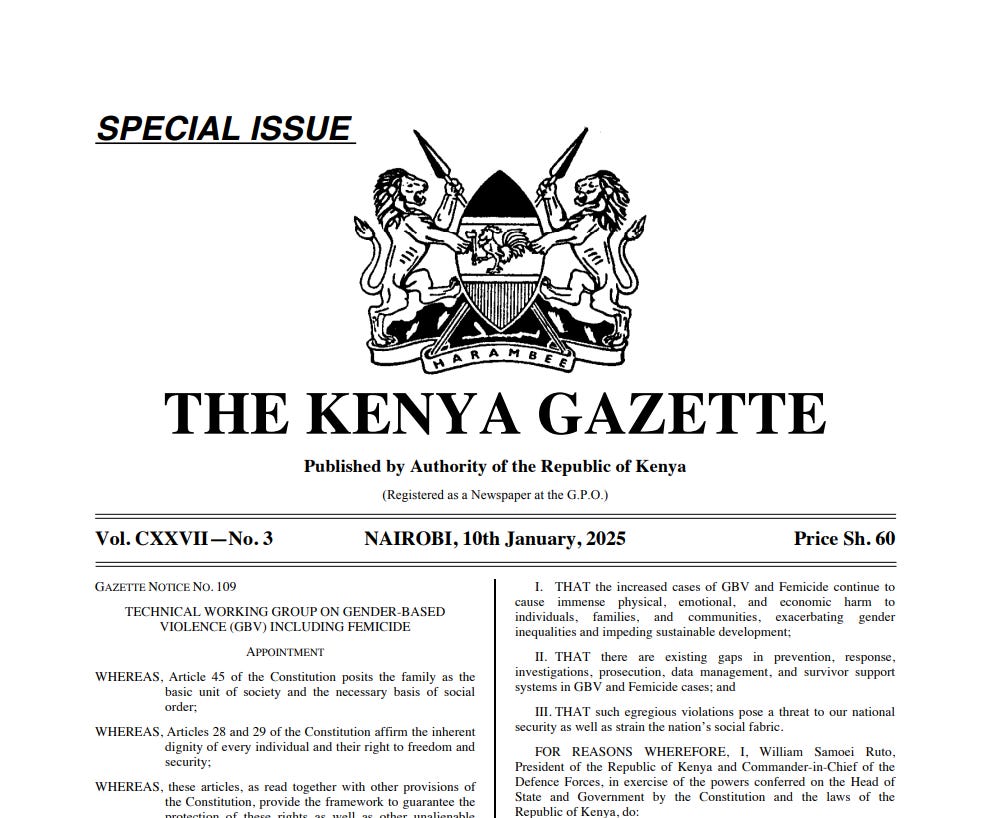
Kenya’s new femicide task force may repeat old mistakes, excluding survivors and lacking data.
Speaking at a Femicide conference to mark the 16 Days Against Gender Abuse, AIG Donatha Kiplagat explained the challenges police officers face, “Femicide cases are treated as murder and that is where the problem stems from. We ignore the history of verbal abuse or stalking. When you come looking for data on femicide you do not find any because femicide is treated as murder. The question then comes in, should we have a femicide law? Another gap is when survivors report cases to the first responders, our officers sometimes show bad attitudes or expect bribes. Survivors tend to withdraw and might fail to get justice.”
Wafula Nafula, a fierce advocate for gender equality and human rights, terms the response from the government as a tick box exercise with no political willingness. “The response was reactivated and it was too late, the government saw this as a risk factor not to trigger more protest. I do not have high hopes with this report because it had a poor public participation framework. We want laws targeting femicide as a stand alone crime.”
In agreement with Nafula, Njeri Migwi, the co-founder of Usikimye initiative, a sanctuary for survivors of sexual and gender-based violence (GBV) in Kenya, says the TWG response is rhetoric from the government. “The formulation of the task force lacked inclusivity from the start, we wrote a policy brief, a legal framework brief and a mortuary brief with 96 areas of recommendations. We need to review this report first and see if all of our recommendations were put in place. The process lacked transparency and accountability. I’m eager to see how that report will reflect on GBV.”
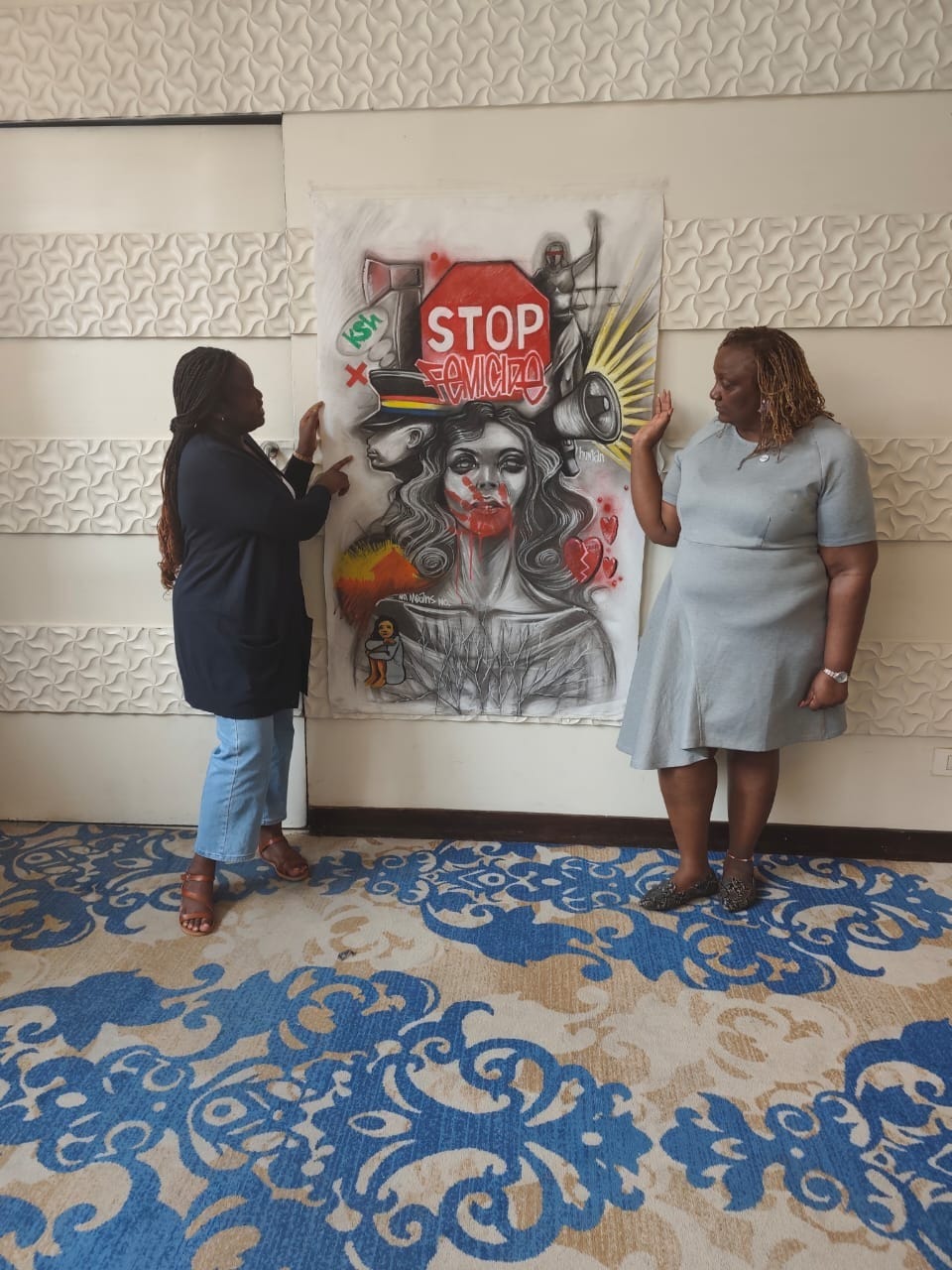
According to a study on court judgements on women’s access to justice in Gender Based Violence (GBV) cases, Gender Based Violence (GBV) and Sexual Gender Based Violence (SGBV) cases tend to fall under other offences such as murder, trafficking and aggravated robbery etc. Hence the on-going advocacy to clarify the GBV definition
Africa is still leading in the trend of victims of intimate partner/family member femicide with 21,700 victims, followed by Asia with 18,50, the Americas with 8,300, Europe with 2,300, and Oceania with 300 victims, according to a report published by the UNWomen in 2023.
Globally, 29 economies around the world have enacted laws that address femicide. Among the 3.97 billion women living across 190 economies, only a small fraction, approximately 450 million reside in countries where legal protections against femicide are in place. This translates to a global statistic where merely 11 out of every 100 women are legally safeguarded against femicide.
Mercy Mwikali, a police officer in Kibera, Kenya sits at the child protection and gender desk office. She attests to the number of GBV cases they receive in a week, and majorly child defilement cases. According to her, the gender desk in the police station handles gender issues, but not murder, and especially not femicide.
After recovering from the rescue centre, Mary was encouraged to file for a case against her husband, she was terrified but determined. The matter was presented to court but she failed to show up for the hearing session. “I was advised by the police officers that such matters don’t end well in court, the man will be released on bond and the money will go to the court. I will not gain anything and he will be scot free in a matter of days, I needed to be compensated but mostly I needed justice and protection” affirms Mary
The reason why Mary agreed to settle this matter outside court, is because of the advice a fellow police woman told her. “ I demanded a payment of KES50,000 for all damages including my lost tooth. The family of the accuser was only willing to pay her KES30,000. An agreement was made with her mother-in-law, the money was paid in two installments. And her husband was scot free.
Without survivor voices, a femicide task force could lose its purpose.
Siasa Place, an civil society group that was involved in the public participation of the Technical Working Group (TWG), also noted some gaps in the formulation of the task force and the main agenda is set to solve.
“The technical working group feels like a rushed initiative that lacks accountability and even a dedicated data system, which makes effective policy-making impossible,” said Judy. “Its composition also leaves out the most important voices of survivors and activists who should be at the center to ensure the issues are properly understood and addressed.”
Speaking to Caroline Sakwa, head of gender and social inclusion at SHOFCO, said she first learned about the task force through the gazette notice, where the government invited extensive public participation.
She is hopeful the initiative will yield positive outcomes for civil society organizations like SHOFCO, particularly in mapping GBV hotspots and generating recommendations that can inform strategy and programming. She also sees potential for the task force’s work to influence budget allocations, including dedicated funding for safe houses for survivors.
However, she cautions that the government should have prioritized preventive measures from the outset, rather than relying primarily on the task force.
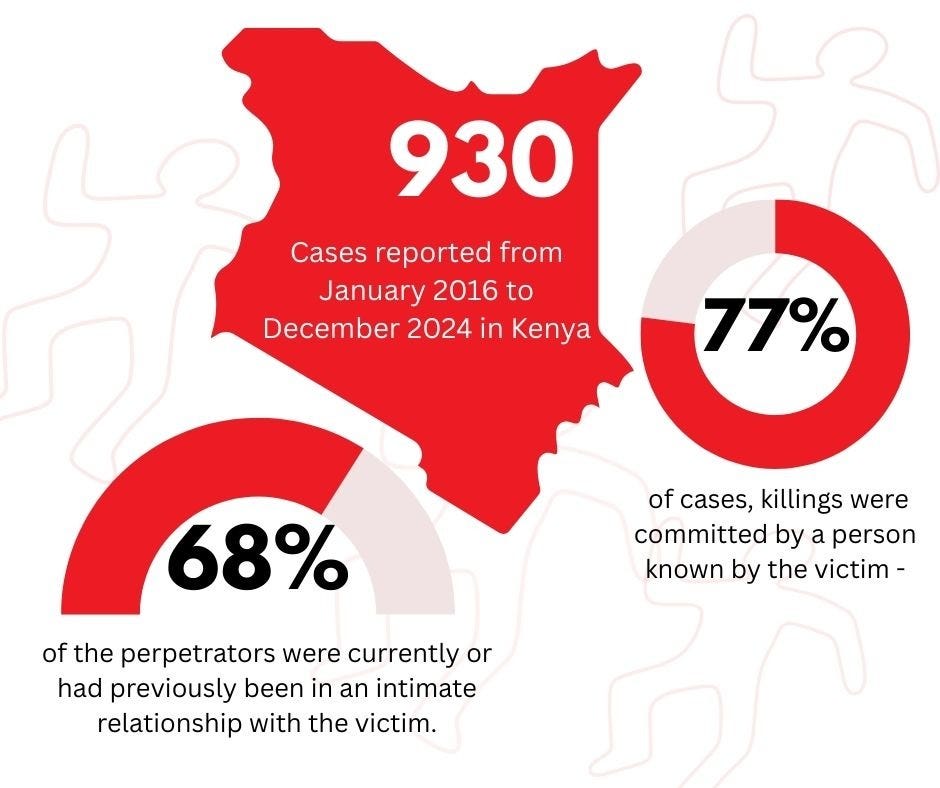
According to news reports and data compiled by the Odipo Dev and the Africa Uncensored, over 930 cases of female murders from January 2016 to December 2024. The data also showed, in 77% of cases, killings were committed by a person known by the victim – an intimate partner, relative or friend. 68% of the perpetrators currently or had previously been in an intimate relationship with the victim. Husbands, then boyfriends, are the biggest culprits. In only about 22% of cases, the woman was killed by a stranger or relationship is unknown.
Amnesty International’s Executive Director Houghton Irungu was at the forefront of the #EndFemicideKe match and this is what he had to say. “As Amnesty International we call for the immediate release of the Task Force Report. We hope to see legislative charge as a distinct category within our criminal books. We want to see investment particularly in safe houses and spaces with zero tolerance and compliance with the law of prosecution of people who have been found guilty.”
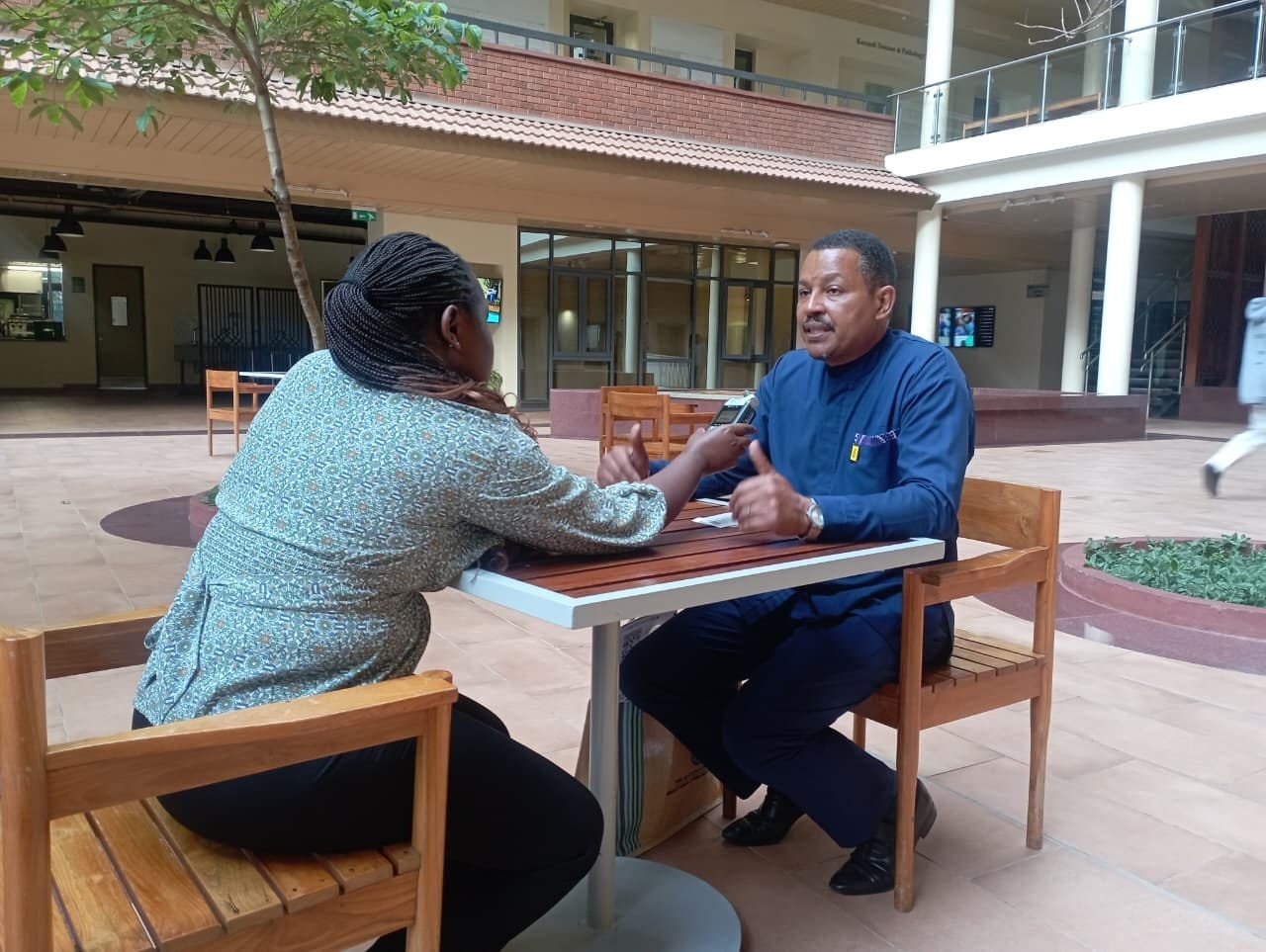
The limitation in the task force was highlighted by Judy Achieng, an officer with Siasa place. “ The technical group had no good representation of the survivors or victims. They should have considered people who have been on the forefront of the Femicide war, people like Njeri Migwi. The group formation seemed political and it does not have a plan to fix systemic failures.”
Survivors like Mary are waiting for the report as well, to see what changes. “So far, the problems I experienced at the police station are still what some women in my neighborhood are faced with. I don’t know if anything will ever change,” says Mary.
A way forward from this, Houghton Irungu advises, is the push for constituencies to put pressure on the office of the deputy president. “The report is still with him and we need to see parliamentarians openly calling for the finalization of the report. If we had femicide as a separate law, then we would necessitate the infrastructure that the police could use to end femicide.”
Edited by Nelly Kalu
Editor’s note: This story is part of our effort to bring a solutions lens to investigative reporting on gender bias, particularly in reproductive health. Guided by four pillars—the response to the problem, the evidence for that response, its limitations, and the insights that can be replicated—we aim to show not just the problems, but how people are responding and building resilience in the face of challenges.
This story has been supported by the Solutions Journalism Network, a nonprofit organization dedicated to rigorous and compelling reporting about responses to social problems.
Author