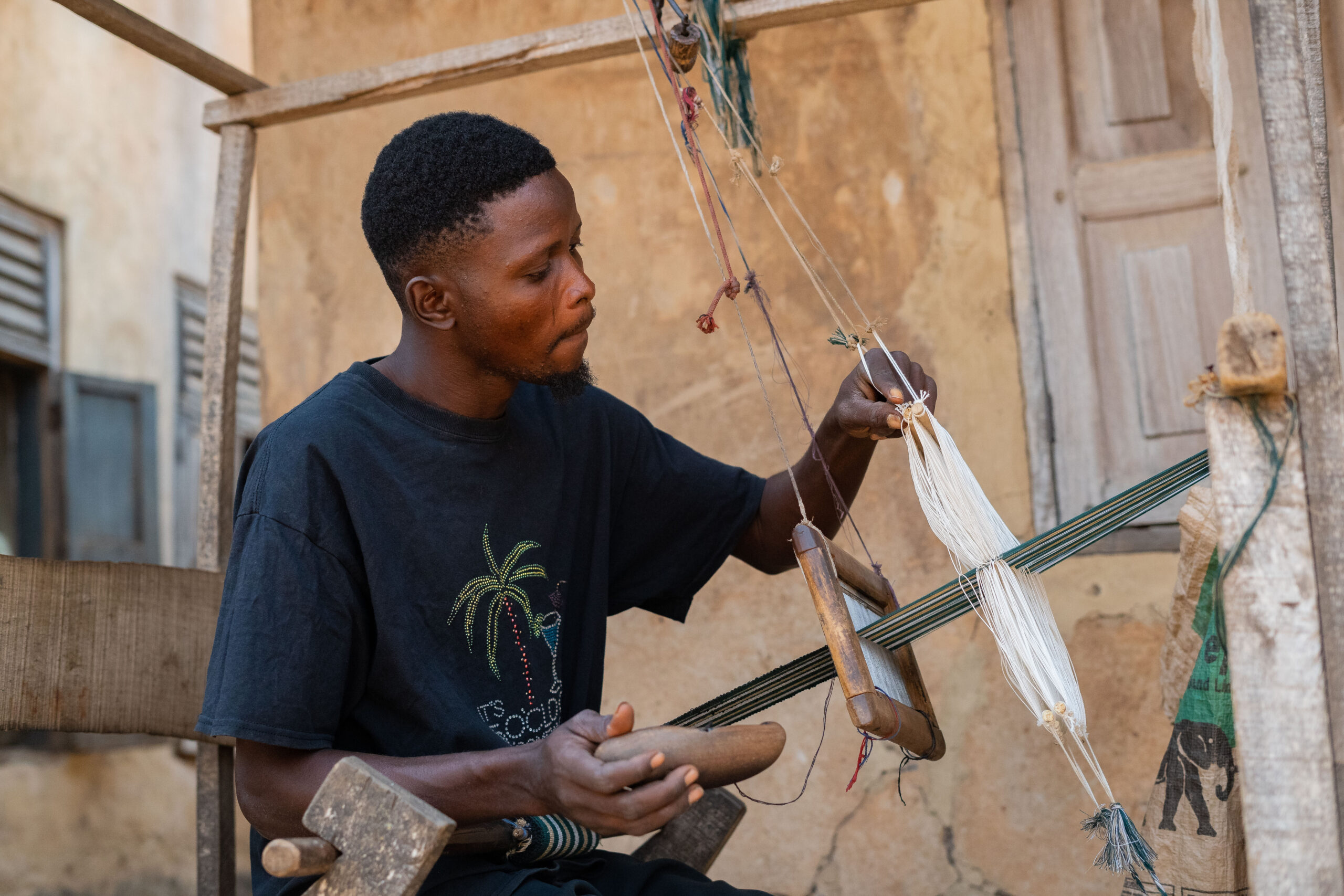
For generations, Iseyin in southwestern Nigeria has been known for Aso Ofi, a handwoven fabric that is an important part of Yoruba culture and identity. But today, the tradition and the people who keep it alive are facing growing pressure.


In recent years, Aso Ofi has found a new place in modern fashion, with designers in Nigeria and abroad using it for everything from jackets and dresses to bridal wear. This growing demand has created more opportunities for the industry, but it has also brought new challenges. Cheaper, factory-made versions from China are now competing with locally woven Aso Ofi in Nigerian markets, putting more pressure on local weavers who cannot match those prices.

Some producers are adapting, experimenting with new materials, colors, and collaborations to meet changing demand. Others are holding tightly to traditional methods, hoping that education and awareness will help buyers understand the difference between what is woven by hand and what is stamped out by machines.


Aso Ofi is woven by hand on locally constructed wooden looms. The cotton is prepared, the thread is spun, the yarn is arranged, and the loom is set up before weaving begins. The weaver then works the threads by hand to build the pattern piece by piece. A single piece can take days to complete.

Photography By Ayo Adams
Author